
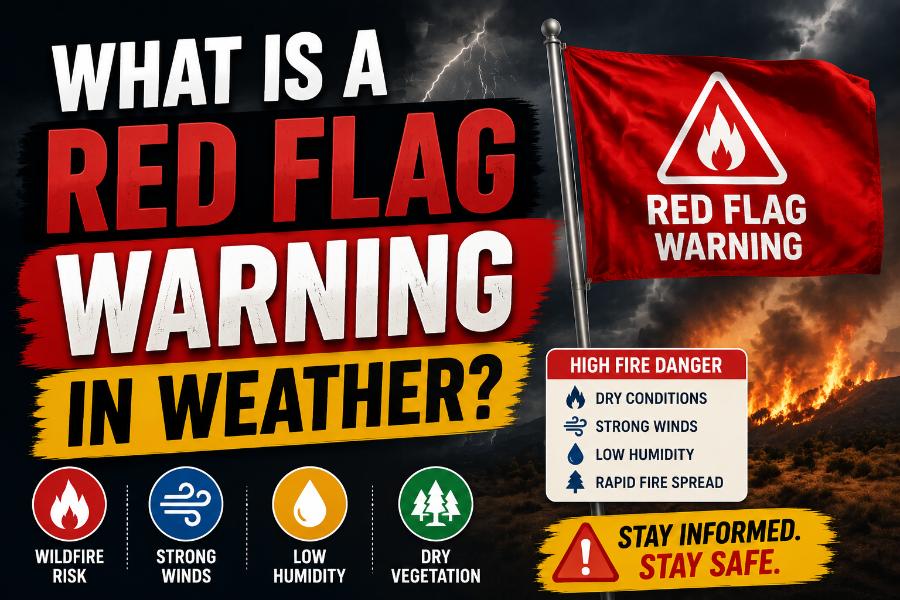
A Red Flag Warning is an alert issued by the National Weather Service when critical fire-weather conditions are occurring or are expected soon. It does not mean that a wildfire has definitely started. It means the combination of dry fuels and dangerous weather could allow a fire to ignite easily, spread rapidly, and become difficult to control.
The exact criteria vary by region because vegetation, climate, elevation, season, and local fire behavior are different across the United States. Common ingredients include very low humidity, strong or gusty wind, dry vegetation, hot temperatures, unstable air, or dry lightning. When a warning is active, people should avoid activities that can create sparks or flames and follow local restrictions.
Why Is It Called a Red Flag Warning?
The term comes from the long practice of using red flags to signal danger and increased readiness. In modern weather communication, “Red Flag Warning” is a specific fire-weather product. It is intended especially for fire managers, emergency agencies, land managers, and the public in areas where small ignitions could become fast-moving wildfires.
The phrase can be confusing because “red flag” is also used in relationships, finance, sports, beaches, and other contexts. In a weather forecast, it refers to fire danger, not a hurricane warning, heat warning, or general severe-weather alert.
What Conditions Trigger a Warning?
A warning typically reflects two broad factors: dry fuels and critical weather. Fuels include grass, brush, leaves, timber litter, and other burnable vegetation. Even strong wind and low humidity may not create the same fire danger if fuels are moist. Conversely, extremely dry fuels can become hazardous when ordinary weather turns warmer, drier, or windier.
The National Weather Service glossary describes Red Flag Warnings as alerts for weather conditions that may produce extreme burning conditions. Many local offices evaluate sustained wind, gusts, relative humidity, recent rainfall, fuel moisture, drought, lightning, and seasonal vegetation. Some regions focus heavily on dry thunderstorms. Others use combinations of wind and low humidity.
There is no single national humidity or wind number that applies everywhere. A threshold suitable for a desert, mountain forest, prairie, or coastal region may not fit another ecosystem. Always read the local warning text rather than relying on a generic number from social media.
Red Flag Warning vs. Fire Weather Watch
A Fire Weather Watch means critical fire-weather conditions are possible in the near future, but timing or confidence is less certain. It is a preparation signal. A Red Flag Warning means the conditions are imminent, expected with high confidence, or already occurring. The National Weather Service often summarizes the difference as “be prepared” for a watch and “take action” for a warning.
A watch can be upgraded to a warning as the forecast becomes clearer. It can also expire or be canceled if conditions do not develop. Both products deserve attention because they give households and agencies time to reduce ignition risks and review emergency plans.
Does a Red Flag Warning Mean There Is a Fire?
No. The warning describes an environment favorable for extreme fire behavior. A separate incident alert, evacuation order, or wildfire information source would communicate an actual fire. However, active fires can become more dangerous during a Red Flag Warning, and new fires may grow quickly before responders can contain them.
Do not wait to see smoke before taking the warning seriously. Prevention is the main purpose. One spark from equipment, a dragging chain, an escaped debris burn, fireworks, or a poorly extinguished campfire can have greater consequences under critical conditions.
How Wind Increases Wildfire Danger
Wind supplies oxygen, bends flames toward unburned vegetation, dries fine fuels, and carries embers ahead of the main fire. Those embers can create spot fires across roads, rivers, or fire lines. Gusts also make fire direction less predictable and can threaten firefighters and residents who believe they are outside the main path.
Downslope and gap winds can accelerate suddenly in certain terrain. A forecast may mention named regional wind events or highlight mountain passes and canyons. People in those areas should pay attention to local detail, not only the county-wide headline.
Why Low Humidity Matters
Relative humidity describes how much moisture the air contains compared with the maximum it could hold at that temperature. When humidity is very low, grasses, leaves, and small branches can lose moisture rapidly. These fine fuels ignite easily and help flames spread.
Humidity often changes through the day. Afternoon values may fall sharply as temperatures rise, while nighttime humidity may recover. In some wind events, recovery remains poor overnight, extending dangerous conditions. Warning text may specify the most critical hours.
The Role of Dry Lightning
Dry lightning occurs when a thunderstorm produces lightning but little rain reaches the ground. A strike can ignite remote vegetation, and gusty thunderstorm outflows can spread flames. Multiple strikes may start several fires at once, stretching firefighting resources.
Some regions issue Red Flag Warnings primarily for abundant lightning over dry fuels, even when the typical wind-and-humidity pattern is different. This is another reason local criteria matter.
What Should You Do During a Red Flag Warning?
First, check the full warning from the National Weather Service and local emergency management. Note the affected area, start and end time, wind forecast, humidity, and listed precautions. Conditions may be critical only in certain elevations or vegetation zones.
Avoid outdoor burning. Follow burn bans and permit restrictions. Do not use fireworks. Postpone welding, grinding, target shooting with equipment that can spark, or mowing dry grass during the hottest and windiest period. If you must tow a trailer, secure chains so they cannot drag on pavement and throw sparks.
Use vehicles carefully. Do not park on dry grass because hot exhaust components can ignite vegetation. Check tires and bearings before travel, since mechanical failures can create sparks or hot debris. Carry basic emergency supplies and keep mobile devices charged.
At home, move combustible items away from buildings, close windows if smoke is nearby, and make sure address numbers are visible to responders. Review evacuation routes and include pets, medications, important documents, and mobility needs in the plan. Never block roads used by emergency crews.
Campfire and Outdoor Recreation Safety
A Red Flag Warning may lead land agencies to restrict campfires, charcoal grills, smoking, or vehicle access. Rules can differ among federal, state, tribal, county, and private lands. Check the authority responsible for the exact recreation area before leaving home.
If fires are permitted, follow every condition and never leave one unattended. Drown, stir, and feel the ashes until they are cold. Under critical fire weather, the safest decision is often to use a gas stove in an approved location or choose food that requires no open flame.
Home and Property Preparation
Long-term wildfire preparation should happen before a warning. Remove dead leaves and needles from roofs, gutters, decks, and the base of walls. Trim vegetation according to local defensible-space guidance. Store firewood and flammable materials away from structures. Use ember-resistant vents and noncombustible materials where practical.
During a warning, focus on immediate readiness rather than major landscaping work that uses spark-producing equipment. Place evacuation items where they are easy to reach, park vehicles facing the direction of escape, and keep driveways accessible.
What Businesses and Worksites Should Consider
Construction, agriculture, landscaping, utilities, railroads, and industrial operations may create ignition sources. Supervisors should review hot-work permits, spark arresters, fire watches, equipment maintenance, and shutdown thresholds. Water, extinguishers, and trained personnel should be available where required.
Schedule higher-risk work outside the critical period when possible. Communicate the warning at shift changes and with contractors. A small procedural change can prevent a costly and dangerous wildfire.
How Long Does a Red Flag Warning Last?
The duration depends on the weather event. Some warnings cover several afternoon hours; others continue overnight or across multiple days. The posted expiration time can change if forecasts improve or dangerous conditions persist. Updates may expand, shrink, cancel, or extend the affected area.
Do not assume the risk disappears instantly when the warning ends. Fuels may remain dry, local restrictions may stay in effect, and fire danger can still be elevated below warning criteria.
Where to Find Reliable Information
Use weather.gov, your local National Weather Service office, county or state emergency management, and official land-management agencies. Wireless Emergency Alerts, NOAA Weather Radio, local news, and trusted weather apps can supplement those sources.
Social media can spread information quickly, but verify screenshots and maps. Check the issue time, expiration time, location, and original account. Old warning graphics are sometimes reshared during a new event even though the details no longer apply.
Common Misunderstandings
A Red Flag Warning is not a command to evacuate. Evacuation instructions come from local authorities in response to an actual threat. It is also not limited to places with forests; grasslands, shrublands, and agricultural areas can experience rapid fire spread.
The warning does not guarantee a fire will occur, and the absence of a warning does not make careless burning safe. Fire restrictions and common-sense precautions apply whenever fuels are dry. Weather alerts are one part of risk management, not a substitute for responsible behavior.
Build a One-Hour Readiness Plan
A warning can arrive when a household is busy, so a short checklist helps. In the first ten minutes, open the official alert and confirm whether your address is inside the affected zone. Check local burn restrictions and look for any nearby fire incidents. Charge phones and portable batteries.
During the next twenty minutes, secure obvious ignition hazards. Shut down unnecessary outdoor flame sources, bring lightweight items away from dry vegetation, and make sure trailer chains and equipment are stored safely. Place keys, shoes, medications, pet carriers, and identification where they can be reached quickly.
Use the remaining time to contact household members and review two exit routes. Do not create traffic by leaving solely because of a weather warning unless local guidance recommends it, but be ready to move quickly if a fire starts or an evacuation notice is issued. People who need extra assistance should arrange transportation early.
Red Flag Warnings and Other Alerts
A Red Flag Warning addresses the potential for rapid fire ignition and spread. An Air Quality Alert addresses unhealthy pollution or smoke. An Excessive Heat Warning addresses dangerous heat effects on people. A High Wind Warning addresses damaging wind. These products can overlap, but each communicates a different hazard.
During an active wildfire, residents may also receive evacuation warnings, evacuation orders, shelter information, road closures, or civil emergency messages. Those instructions come from local authorities and should take priority. Weather alerts explain the atmospheric environment; incident commands explain what people near a specific fire must do.
Understanding the distinction prevents two mistakes: ignoring a Red Flag Warning because no fire is visible, and treating the warning itself as an evacuation order. The correct response is prevention plus readiness, followed by immediate compliance with any incident-specific direction.
Pets, Livestock, and Vulnerable Household Members
Include animals in the plan before smoke or flames appear. Keep carriers, leashes, vaccination records, food, and water together. Know which shelters or hotels accept pets. Livestock owners may need more time, trailers, alternate pasture, and coordination with neighbors, so waiting for a mandatory order can be dangerous.
Older adults, children, people with disabilities, and anyone dependent on powered medical equipment may require transportation or backup power. Register for local alert programs and discuss assistance with family, caregivers, or emergency services before fire season. A weather warning is a useful prompt to confirm that those arrangements still work.
Frequently Asked Questions
What is a Red Flag Warning in simple terms? It means the weather and dry vegetation could allow fires to start easily and spread quickly.
Is a Red Flag Warning worse than a Fire Weather Watch? A warning indicates greater confidence and more immediate conditions. A watch means critical conditions are possible and people should prepare.
Can I grill during a Red Flag Warning? Rules vary by location and equipment. Avoid open flames when possible and follow all local fire restrictions. Gas grills may still be restricted in some areas.
Does a warning mean I should evacuate? No. Evacuate only when local authorities issue an order or when immediate danger requires it. Use the warning to prepare and prevent ignition.
Why are local thresholds different? Vegetation, climate, season, terrain, and normal humidity vary widely, so National Weather Service offices use criteria appropriate to local fire behavior.
Can there be a warning without high temperatures? Yes. Strong wind, very dry air, dry fuels, or lightning can create critical fire weather even when temperatures are not unusually hot.
Conclusion
A Red Flag Warning is a call for fire prevention and readiness. It means critical fire-weather conditions are occurring or expected soon, not that a wildfire is guaranteed. Dry fuels, low humidity, wind, heat, instability, and lightning can combine in different ways depending on the region.
Read the local warning, avoid activities that can create sparks or flames, follow restrictions, and review your evacuation plan. The red flag in this weather term is a symbol of urgency: a small ignition can become a major emergency much faster than usual.